“Art is one’s own eyes and not the artist’s hands.”
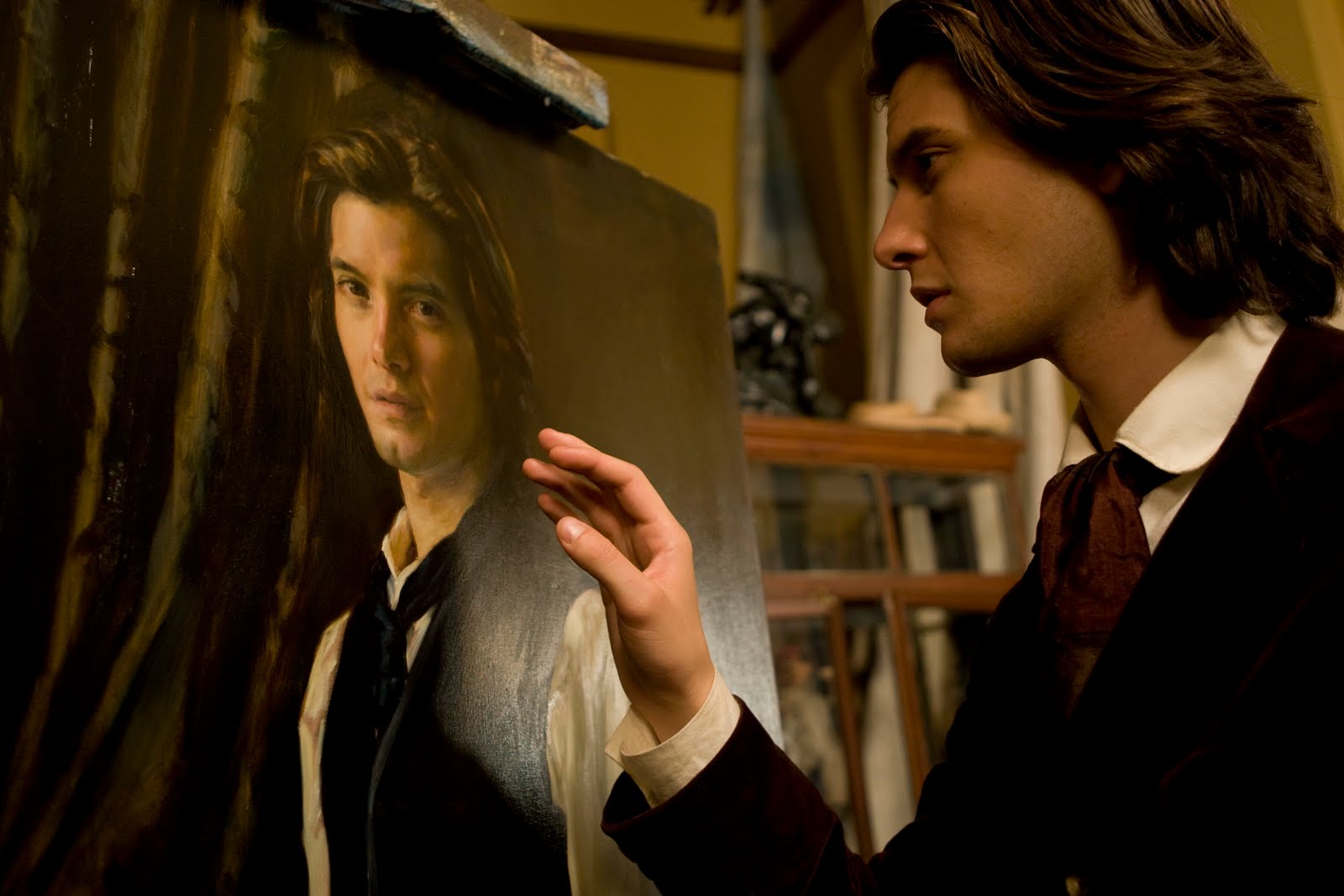
As Basil Hallward added finishing touches to his masterpiece painting of his friend Dorian Gray, one would remark how dexterous he was. Every detail painted to perfection: the sharp brows, the hue on the cheeks and every strand of hair. One would remark on the creases on the young man’s suit and say how it looked as if it were the person in lifelike form. A wealthy aristocrat would stand and stare upon the art and remark on the talent of the painter. But it was only Basil who would have known and understood the reason behind such detail and perfection of a piece of art that could easily have been declared as his all time great.
It is said that an artist always pours a bit of himself in every art he creates. It is said among artists that to first create an art one needs an inspiration. Otherwise the art is without soul. Basil Hallward did not paint his friend on a whim or as a daily monetary pursuit. He painted him because when the first time his eyes met his, he found in him a flame that burnt like never before. This should not be mistaken with the flame of passion. It is the creative flame that is doused by contentment in life but agitated by curiosity and enthusiasm. The moment he met him, Hallward found in himself a fascination for that personality across the room. He would it describe it such that if he were to explore it, it would consume his entire soul. It was such an interaction that as he came to know him as a friend, he decided to paint him. He prized Dorian Gray. The young man was a beloved a friend, a fascinating personality and an inspiration to him alone. It was the fact that Hallward saw him thus. Mr. Gray was unaware of this. It’s also very well known that an artist conceals his perception of objects from the world until his work is finished and some aspects he would never reveal. It is so, because an artist has his own world. Well known among artists, is a knowledge that an artist be one who looks at things twice. An artist would not pass by a fountain without staring at the canopy it forms around the centre sheathing within it a wonder that may be accessed by first passing through the wall of water. Or if the fountain is based on a gargoyle design, he would immediately conjure up an image he would carry it to his home and immediately set to work and it’s the way he chooses to see the sight that would determine the route his work of art would take. It depends on how he perceives the scene.
Hallward would go on to say that he would never exhibit the painting stating that there was too much of himself in that painting. Now one would ask how can an artist put himself in the painting or in a sonnet or a ballad of another person. Is not that identity theft? No, it is not. When a poet writes a ballad or an artist paints a picture it is exactly how he sees it not as the subject demands it to be. When Hallward painted the picture, he had Dorian Gray seated in front of him but all throughout his work, it is his perception of Dorian Gray that ultimately culminated in the painting. If one might look into his work deep enough and with shrewd intellect, he would discover Basil’s basic nature or even more. In the movie Chaplin, Charlie Chaplin has been shown to have hidden behind masks in his social life. When someone asked him about his personal flaws he merely said, “If you want to look at my insecurities, watch my movies.” It was in his movies that he expressed his hidden feelings, his fears that normally he would not express. His movies were the medium to let out all that ate up his insides, so to speak. An artist once revealed to the public eye ceases to exist. Once his modus operandi is known, there is no unpredictability left in his work. Thus the artist keeps quiet and works. And his work reflects his thinking, his passions and his prejudices.
An artist’s world is one to envy. But to see it, one has to be an artist. One may be a critic. But a critic never enjoys the pleasures of art. Even if he may unravel partly the sight of the artist behind an art, he would never feel that sense of passion or fulfilment or joy that was felt by the artist. A critic’s life is one of a cynic. He always tries to find the faults. The lesser faults, the greater the work. But what are the basis of those faults that he unearths? It’s a traditional approach that is imbibed in a critic. Maybe the artist meant to break traditional barriers and his work was never appreciated. No doubt, the artist was talented they would say. They would further complement on his skill: the dutiful strokes of the brush or the perfect word play in the poem. But then would come a snide remark saying the artist failed to adhere to a certain criterion of judgement. We shall not dwell upon the judgement of art. That calls for another discussion, altogether. The point being, that somewhere with all his skill, the artist saw a narrow pathway that he could take and explore.
On completion, the art represents the artist’s choice of the subject, the way the subject has been dealt and the influence the subject had on the artist. The mind is a complex one and it can never be fully understood. An artist may sometime not understand the full meaning of his own viewpoint. Still he would do it because it fills him with a sense of contentment. Any review on an art is never wrong. It may simply deviate a lot from the artist’s thinking or it may deviate less. At the end of the day, art is an idea, a concept born within the artist’s mind. It’s his skill that determines how well that concept is put forward. The art then provokes the viewers who may think differently because we all are different. Art is a state of mind, a vision and a reflection of the artist and the critic alike.


Leave a comment