Note: This review is divided into two parts. The first part is a spoiler-free review of the elements of the anime and a handy guide to discern if the anime is suitable for you. The second part includes key spoilers as it is a plot review with the primary motif in viewpoint.
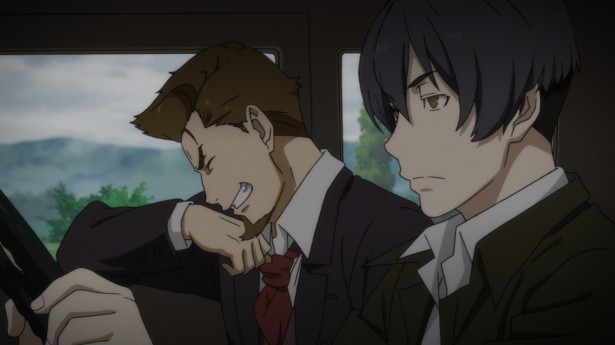
Generally, I end up liking most anime that feature rain or overcast skies as the central atmosphere in terms of weather. One of my favourite anime, Naoki Urasawa’s Monster uses a combination of rain and clear sunny skies to great effect. Another anime that captures the atmosphere succinctly using rain is Psycho Pass. I can never wash away the image of the rainy city of Tokyo as Tsukimori Akane outwitted every criminal to solve complex crimes. In contrast, Zankyou no Terror presents its clear sky as a gorgeous palette of blue that watches two boys befuddle an entire police department. 91 Days starts off showing us a glistening metal staircase in a downpour and presents us our protagonist, Angelo Lagusa, wearing his trademark overcoat and a smug expression. Naturally, the sombre start is off-putting if one has just plugged in for some relaxing anime. Well, let us get some things clear about this anime first.
91 Days is a mafia story by Shuka studios set in the fictional town of Lawless. It features a young boy on a trail of vengeance against the Vanetti family who had murdered him parents and brother when he was very young. Pointing out a clear antagonist is a bit more complex than it seems as the prime antagonist role portrayed by Nero Vanetti is unlike any. We do have a mad, eccentric, blood-thirsty, unpredictable nemesis, but he turns out to be a nemesis for both Angelo and Nero. Honestly, I found Nero to be quite a likeable character. The story also features both inter-gang and intra-gang conflicts that combine to present Angelo with roadblocks as well as opportunities. Full marks to the writing of the plot as the viewer is always on the edge over the 12 episodes besides being always in the dark for whatever happens next.
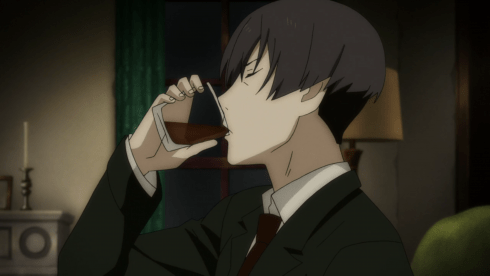
The anime centers the plot around an illegal drink–a rather stiff bourbon brew that dominates the taste buds of every character in the story as well as the curiosity of a viewer who has a keen sense of his/her drink. It is astonishing how the writers make this drink the subject of the exposition, deception, trust, negotiations, commitments, and vengeance. Even the food is depicted brilliantly in the anime; saucy lasagnas, juicy steaks, run of the mill canned pineapples, they are all very well presented. The anime does justice to the human sense and satisfaction of food, smoke, and drink. Angelo is a chain smoker and the cigarette animations are one of the best I have ever seen. The characters enjoy their consumptive pleasures with noticeable satiation, which convinces the viewer of the emotions attached to food and drink in this setting. This aspect is essential to present the Lawless brew as the center of attraction and a medium of change throughout the anime. Another feather in the cap. Needless to say, the animation is detailed, spot-on, sharp, and aesthetic.
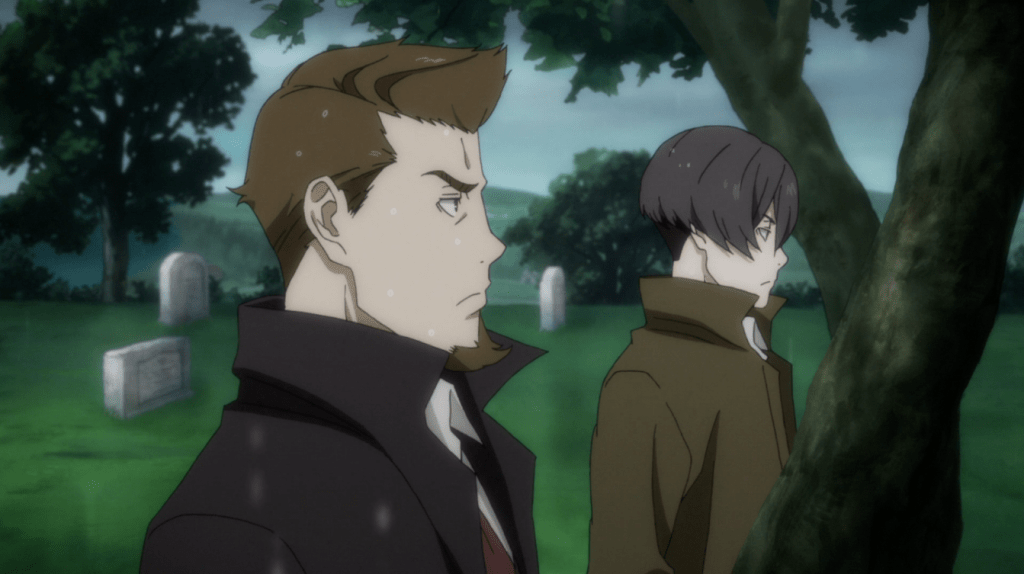
Finally, every gangster story must have suspense and this anime has no shortage of it. Hence, this is not really a differentiator from other gangster stories. The main factor that sets this apart from other gangster stories is the focus on emotions (as in most anime). After all, gangsters are human beings. They feel scared, empty, possessive, sometimes lonely, maniacal even, delirious at times too. Some feel paranoid to the extent they would vanquish anybody who fuels that paranoia. But most importantly, they also feel sorrow, regret, maybe even an iota of repentance. Many stories skip out on these aspects as they show gangsters as clever, calculating, driven individuals who trust people and take vengeance when that trust is broken. Here, the boundaries are blurred. It is difficult to entirely distinguish between the righteous and the wicked. The portrayal of emotions is the second most important aspect of this anime’s narrative and its execution makes it great.
The music of this anime is not something to write plaudits about except that it works. It blends in seamlessly with the narrative and that is the highest compliment I can give to any soundtrack. For a tale so gripping, a soundtrack too loud would have been a disruption. The opening theme though stands out dominantly. It has been taken off the track called “Signal” by TK who is an amazing composer and song-writer. The song sits in perfectly with the mood of the anime and as the plot unravels it seems more apt than ever. After the anime ends, TK’s song remains a warm reminder of a brilliant anime.
To wrap this first part, if you like a good thriller and want a complete package of a tale with emotions, good setting, thrilling stand-offs, and edge-of-the-seat suspense, go watch this. It is available on Netflix, so easy for most of you.
[The following part is a note on the primary motif of this anime: vengeance. This includes plot spoilers near the last few lines, so perhaps you might want to bookmark this link and read after you have finished the anime, if you haven’t watched it yet.]
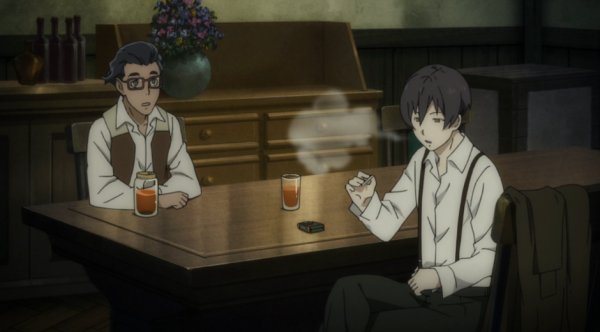
People die for so many reasons. Some as scapegoats, some as avengers, some as heroes, while some for sacrifice. Men swear with their blood, and sweat as well as die with it. The values for their promise outweigh the fear. Blood is thicker than water, they say. Well, families believe in that. So, do gangsters. They would lay themselves six feet under if it all came down to that. Men would give up their head for their best friend. For them, the life of a friend is more precious that than own. Fear does not rule them because they have conquered fear, and embraced the inevitable. Death is not solely a means to an end. It is a symbol. Death is a symbol of love, trust, and friendship. Death is to be avenged, and the cycle of hatred must repeat itself. Without death, the power of fraternity has no meaning. It is the only sign of a worldly object being more precious than the abstractness of the soul. It is the only measure, as it separates the men who would rat you to death from them who would die protecting you. It is an honour to have such a life next to you who prefers to see his flame doused than yours to even flicker. But what do we do when the avenger decides that his prey should live. It makes me wonder—does death have a purpose, after all? This, of course, must be seen from the murderer’s perspective. If we, for once, forget that the snuffing out of a life is a sentence of anathema, it could be said that murder is definitely, and wholly, a means to an end. After all, people kill for many reasons: survival, hatred, habit, or ultimately, vengeance. The avenger shall prowl the night, with a cap over his head, a gun by side, and purpose loaded in his mind. The avenger cannot be killed. Those who get killed even before the prologue has ended, are unworthy of such an honour. The one who kills for hatred regrets his actions. The one who kills as a habit does not harbour any emotions. But the one who kills for vengeance, remembers, notes, and records every movement he makes; he is wilier than his wiliest enemy; and he knows when to reveal his true self. The avenger is the one who is the closest to you. Vengeance, by virtue of its existence, has a purpose. A vengeance of blood has a sense of finality about it. Blood is thicker than water, they say; yet, Angelo Lagusa did not kill the man who abetted in his father’s murder but spared the man who had spared his life. At that moment, Angelo Lagusa stopped being the avenger, and Nero Vanetti wore its mantle. The avenger always wins.


Leave a comment