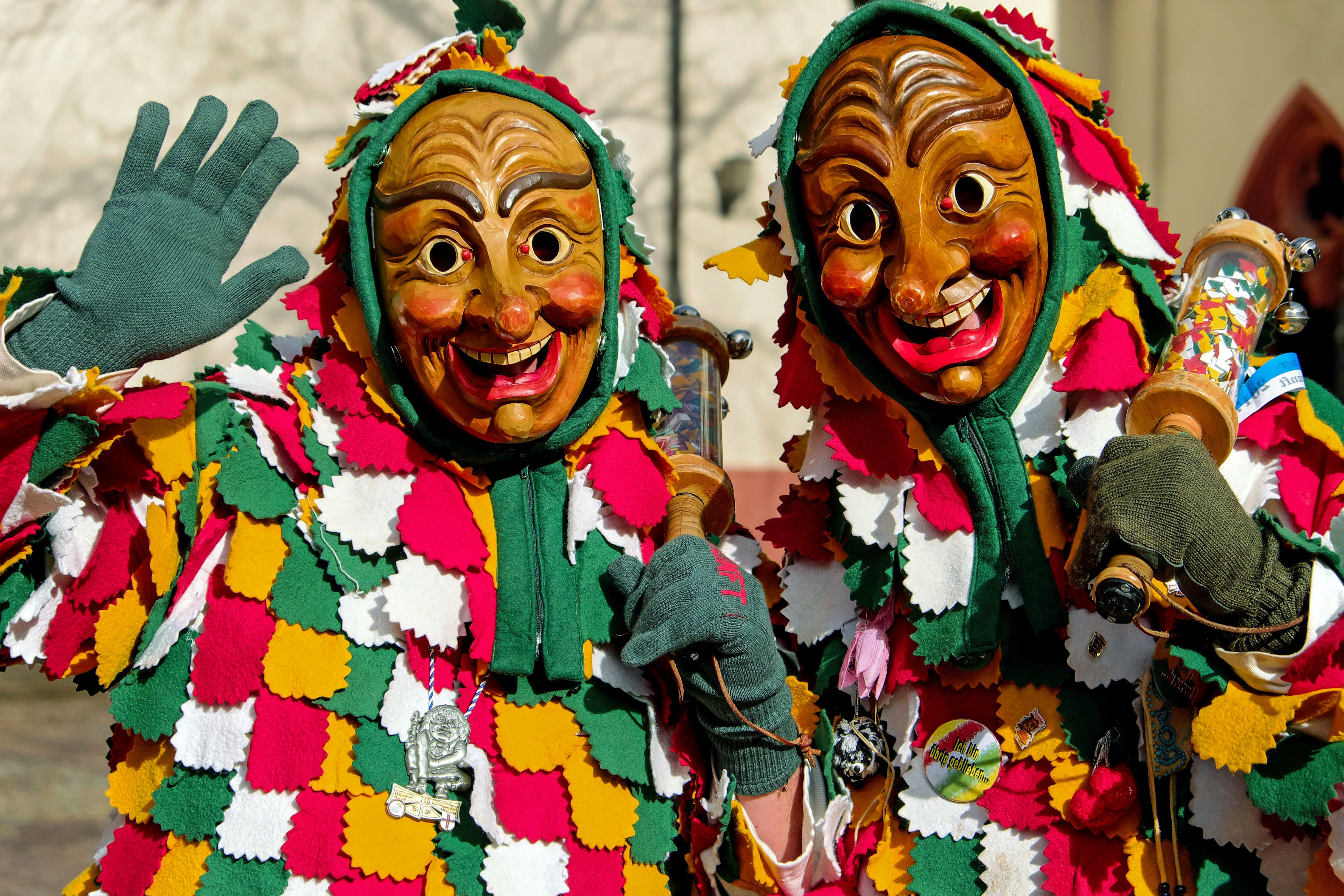
“The integrated pattern of human knowledge, belief, and behaviour that depends upon the capacity for learning and transmitting knowledge to succeeding generations.”
– ‘Culture‘ as defined by Merriam Webster
“The characteristic features of everyday existence (such as diversions or a way of life) shared by people in a place or time.”
Time changes everything—people, status quo, the air, everything that seems limitless always evolves to something new. It is how the world has always functioned. Since the moment the universe began, there has been only one constant, it keeps expanding. The formation of stars, their end, the birth of our planet Earth, and its inevitable end, is all design that fundamentally establishes a simple fact: we are blinks in the overall scheme of things. Life, hence, is fleeting and beautiful and change is the natural way to go about things. Of course, we belong to generations and form staunch opinions on what clicks with us and what irks us. Food, music, books, attitudes are experiential aspects of life that leave an impression on our minds representing the repetitive emotions that they evoke. We move on, but the imprints of those emotions always hold us back.
Culture represents people. When we first meet a person, it is an involuntary step for us to try determining the background of the individual. It usually revolves around the person’s native place, their native language or dialect, and their diet. The fundamental pillars of any person are the things that one performs as a routine, not out of acquired habits, but those that stem from the experiences of childhood and shared by a part of the community, be it family or the social spaces of the person’s origin. Acquired habits may be excluded from the initial evaluations of an individual’s classification of culture since they might strike a chord with the individual, but they cannot be traced back to the formative years of their lives. This is an interesting case to consider. Say, a person was born into a community where they follow a strict vegetarian diet with a rich practice of religious customs. However, the individual had early exposure to incidents or thoughts through books or film that they soon grew out of their community’s habits. They moved out and over the years they grew up as an atheist and following a mixed diet. Such individuals exist everywhere. What defines their culture then?
Certain events in lives bring about drastic changes. We might grow out of our native cultures like smoke from a fire, dissipate into nothingness, undergo a change of state, and continue to exist as something else entirely. We might even shrug off every remnant bit of our “culture” out of strong emotions, then how do we re-acquire another culture? Does it happen immediately, or does it take a generation or more to graft an individual removed from one culture and installed elsewhere?
The larger question thus poses itself—is it right to link an entire society or demography’s culture to an individual? We tend to quickly form opinions about people based on their surname or religion, simply associating the typical characteristics of that society and attributing to an individual whom we are yet to know. Certainly, overly generalized statements such as “Ah, they are all alike,” simply do not help the cause. Of course, the probability is high that they may be alike, hence we associate those behaviours with “their culture”, however, it deprives us of the open-mindedness with which we ought to perceive people and interactions. Language does not define the person. It is only the medium of communication that the individual has spent a considerable their time in life communicating. The contents of what a person habitually communicates are determined by their presentation rather than by language. Yet, we see people make judgments the moment a person speaks a syllable in a language that is foreign to the listener.
It is then quite interesting that one of the outlets of acquiring and evolving cultures in the modern globalized world has been through music. Intertwining of musical influences has been key un developing renditions of otherwise local musical forms onto a global stage by multiple corners of the world. Conversely, local cultural trends have gone global too, albeit with a fan-following rather than reproductions. In either case, the production or consumption of the art forms typical to a geographical region results in the exposure to foreign groups of expressions and styles unknown to them prior. It brings to the fore something quite fundamental. The inculcation of new patterns of behaviours and a transformation in habits comes about only through repetitive exercising of a specific set of activities over an extended period, especially, if they are found significant enough to trigger a culture transformation. Nowadays, the phrase culture transformation is a buzzword in the corporate spaces across the globe, wherein the juxtaposition of business goals, corporate practices that are a mix of various standards comes face to face with the people. People bring forth their own cultural traits in behaviour and once that is mixed with standard operating procedures never yields a uniform experience that theoretically is espoused to work. Hence, modern updates to the management studies factor in the essential aspect of culture, however, at the cost of fair communication, the execution is left to those who are on the job.
In the history of a demography, there come major events throughout elongated periods of time that morph the practices of a group of people. While historically invasions and mass movement of people have played a significant role in culture adaptation and evolution, in the era of post WWII, there have been newer modes of culture exchange. One of the enablers has been a major step-up in the speed of technology evolution on two fronts: transportation and communication. With the commercialization of air travel, it is easier and faster to reach places across the world that were earlier either unreachable for an average individual or simply too time consuming to consider. As individuals travelled far across the world and mingled with people much different than them, they picked up behaviours, aspects, that added to the definition of the individual prior to the experience. Over time, the accumulation of various such interactions and adaptations would appear as a shock to someone who would meet the individual after a significant period. The onlooker would say, “Hey, you have changed so much.” Whereas that would be farthest from the truth. The individual in question has merely added to their own definition, and as such, that is a part of human life. There is a constant worry among the conservatives in every society over how another culture is ripping apart their own and the youth are the reason for the unfavourable shift. Little do they realize that we live at a time when culture as a community is mostly absent the time within a year except during festivals. What remains at a daily level in the community culture is the food and religious practices. However, given the proliferation in the professional spaces, most working youth have been uprooted from the geographies they were born in. In the alien places where the youth of today inhabit, they seek a mix in their social groups. Something that gives them a unique experience with the safety net of a group of their own culturally synced individuals where they can exercise their roots and feel the comfort of familiarity. Without realization, few years pass by, and even through the safety net, they stretch their hands and imbibe practices across the cultures they come across with. Over time, the youth of today will view culture as a shell worn on occasions rather than guiding principles for life.
As the advent of technology continues, the psychological distance between individuals across the globe will continue to decrease. The curiosity of customs across cultures permeates through literature, movies, social networks, gaming, and all that is produced with a mindset of expression instead of didactic communications. The trend of open consumption is on the rise and the generations of tomorrow will only be farther placed from our definition of culture than what we perceive today. It is a beautiful transformation for all of us. Even then, we do ask ourselves, what is our culture at an individual level? The answer to this question is anything but simple, if like me, one is born in one place, grew up in several other places, studied in unfamiliar places, and lived a working life in another place all the while understanding the geography and culture of my native place but never having properly lived there. My individual culture is simply an assimilation of everything I have experienced plus the customs I have adopted and minus those that I have rejected from my native lineage.
One distinction between individual culture and belief systems needs to be brought up: while belief systems define the values and inherently steps that a person lives by on a day-to-day basis, the culture would apply to the person’s most practiced behaviours in terms of language, tonality, likeness for cuisine and general routine. To say it is complex to define the boundaries of where culture gives way to individual values would be right, since aspects of a cultural nature are extracted and then compared with a broader set of people, however belief systems represent the individual that takes roots from the experiences that are completely from the individual’s perspective. We can say that culture is an outside-in view, while values are an inside-out view when studying an individual.
Shifts and evolution of culture is an inevitable facet of human civilisation and history. Influenced by the developments to the ways of life, politics, and networking, civilisation shapes itself throughout the course of history. Those who hold on to the aspects that have become outdated in the context of the motion of progress are the ones who cry foul of the evolution that takes place. Often a collective effort from such groups results in a long-lasting conflict that stirs the tectonic plates of social structures through various strata of demographics. That too is a fundamental phenomenon in a constant state of transformation that is the world that we live in. There will be those who will drive change because they see merit in it, and there will be those who will resist it to avoid making the transition that stares them in their faces.
As individuals, we adopt these changes at our paces, and at certain points in our lives, we resist the same. To culturally define an individual solely based on the current behaviours and attitude would be miss several fine elements in the structuring of the definition of culture that the individual exhibits. To understand one’s own construct of culture and that of those around us, there is the need for an empathetic eye, a curious ear, and a fundamental understanding of the politics and influences around the space where we live. Only by the juxtaposition of all these inputs, can one begin to determine how “culture” as a definition applies to an individual and how an individual’s actions contribute to the evolution of society’s culture that they inhibit.


Leave a comment